
LUCIDA JOURNAL
Sri Lankan Black Pepper: Flavour, Piperine & How to Use It
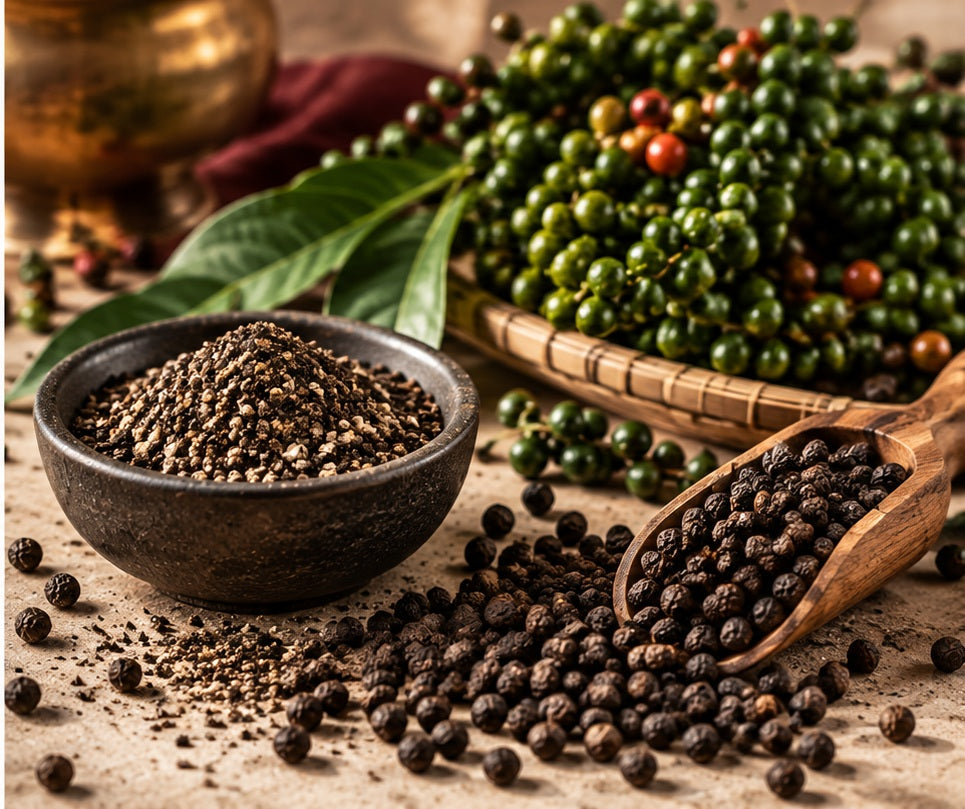
Black pepper (Piper nigrum) earns its place on the table through aroma, warmth and complexity. Its characteristic pungency is largely associated with piperine, one of the best-known naturally occurring compounds in pepper.
What research says about black pepper
Piperine has been widely studied in laboratory, animal and food-science research, including work on antioxidant activity, pungency and interactions with the absorption or metabolism of other compounds. Those findings are scientifically interesting, but they should not be translated into claims that ordinary culinary black pepper prevents or treats disease.
Research on isolated piperine is also not the same thing as evidence about the amount of black pepper normally sprinkled onto food. Lucida sells pepper as food and seasoning, not as a supplement.
What makes good black pepper?
Fresh aroma matters. Pepper should smell lively and fragrant, with warm, woody, citrusy or floral notes depending on origin and processing. Once pepper is cracked, its volatile aromas begin to dissipate, which is why freshness and storage matter.
How to get the best flavour
There is no established “optimal dose” of black pepper for health. Use it according to the dish and your taste. Add pepper earlier in cooking when you want its warmth integrated throughout a sauce, marinade or braise. Add or finish with freshly crushed pepper later when you want its aroma to be more prominent.
Black pepper works far beyond curry: try it with eggs, avocado, roast potatoes, pasta, steak, chicken, seafood, grilled vegetables, salads, soups and creamy sauces. It can also create an interesting contrast with fruit and lightly sweet dishes.
Storage makes a difference
Keep pepper tightly sealed away from heat, moisture and direct sunlight. This helps preserve its aromatic character. Buy a format you will use regularly rather than leaving an opened pack sitting for a very long time.
A note on piperine and medicines
Concentrated piperine has been investigated for its ability to alter the bioavailability of other substances, including some medicines. If you are considering high-dose piperine or pepper supplements—rather than normal culinary use—discuss that with an appropriate health professional.
For the everyday kitchen, the goal is simpler: use aromatic pepper well, and let its flavour do the work.